LITTLE THINGS AND LITTLE MOMENTS
CAN MEAN A LOT
One day, in Alaska, I felt worn out by the constant presentations of the mountains. Mountains shout to the eyes and overwhelm the mind. You can’t ignore them; they keep repeating themselves, echoing visually. So, when a moose joined us at a scenic overlook, he made a nice change and though huge, he was smaller than a mountain. We stood very near him. He was so casually comfortable inside his own skin that we felt at ease with him being there—which was foolish, since a moose is wild and can be exceedingly dangerous. Our son, Corey, lived in Alaska. And, one day, a moose irritated by one of his dogs chased Corey up a tree.
Yet, this moose’s bony, sharp-cornered magnificent ugliness refreshed me. And I was curious. I’d just read about an intricate detail on a moose that shows how God takes care of all possibilities.
There’s a small valve on a moose’s nose that allows him to eat plants that are submerged in water. Maybe some little hide-covered plug that opened and closed when needed; I wanted to see for myself, but I didn’t know if it was on the inside or outside of the nose and, since being close enough to look up a moose’s nostrils is too close and poking his nose in search of his water plug would be unacceptable. So, I kept my distance. Yet, I’ll always believe that an amusing and useful valve on a moose’s nose is as marvelous as mountains. It’s a little thing but it means survival to the moose.
We stayed on the beach in Port Townsend, Washington for almost a month. It was there that we saw evidence of the yellow and red crab and his wardrobe changes. We’d been finding brittle, semi-hard shell-formed crab suits on the beach in sizes extra small, small, and medium—and all of them were empty.
I’d assumed the crabs had died and, still wearing their suits, turned to dust inside them. A marine biologist enlightened me. This crab-suit thing was a growing process. When a crab outgrows his first shell, it gets too tight. So the crab takes it off and for awhile, crawls around in his soft underwear. Eventually, the underwear hardens into another shell. A crab will do this again and again until he reaches his adult size.
During his underwear phases, he is vulnerable. Staying alive and uninjured requires adaptation—a sense of place and what’s going on around him. God gave him instinct–when to lay low and when to strut in each new suit.
Maybe there’s a lesson for all of us in that. Now and then let’s strut wearing God’s brightness of love because during dramatic changes, when we’re feeling soft and vulnerable, we can learn how to adapt, how to use our sense of place, and trust in the spiritual instincts God gives us. A crab’s multiple suit changes is a little thing but to the crab it means life.
On that same beach, Gerry and I went to a Marine Lab and were introduced to more small sea characters. We were the only adults to participate, though a couple of mother’s brought a dozen kids and sat on the sidelines drinking iced tea. Gerry and I got to take part in touch and feed time.
There were these large tanks of salt water full of living creatures, wild things from the local sea. We stuck our hands into that icy water to get acquainted with the soft stickiness of a bright, yellow sea slug; she’d just laid her eggs; they were hanging on the side of the tank; they were white; they looked like folded noodles. In my opinion, the sea slug is a fine example of an off-the-wall piece of cockeyed creativity.
But then, so were the anemones. A sea anemone is made of a small bone column several inches tall with a round ruffled disk on top. There are two circlets of tentacles around the disk so that the anemone resembles a combination–part flower, part witch, and part Phyliss Diller on a really bad hair but, no personality day.
By now, the kids were saying “Yuk.” Gerry and I, being mature, kept our thoughts to ourselves. We met a brown sculpin—a fish who felt rough to the touch and looked like a thug. He had big eyes, a big head, a wide mouth, and wore paisley print on his back instead of scales. He darted around being rude—pushing, shoving, grabbing food. I’ve met people like that, now and the,the sculpin reminded me not to be one.
There were several kinds of starfish. Some felt rough, some slick, some rubbery. One red starfish(the only beauty in the bunch) looked and felt like fine suede. I felt so huge compared to the smallness of all these creatures, I tried to be gentle—tried not to upset the artificial balance they were in. Yet, something strange happened that upset my balance.
I was standing beside a starfish when it got excited. I didn’t know a starfish could or would get excited. I think it happened when someone handed me something the fish wanted to eat—something that felt slimy, something that looked and smelled like chopped up fish intestines.
The starfish moved upward to lay on top of the water, on his back. All his arms started reaching and waving at me. Each arm had little white objects that radiated down to his middle; they looked like short, wet, hyperactive bean sprouts. We were told that they were its feet wiggling and squirming.
In its center, surrounded by its feet, a damp, pink round hole opened up into a sort of mouth. The biologists encouraged us to put fish intestines into that hole—one by one. Then she told me that when a starfish eats, its stomach comes out through this mouth—through those pink damp lips and hangs outside its body until it’s finished digesting. What was God thinking? Doing the not very adult thing, I said, “Thhhuk,” dumped the rest of my intestines into a ten-year olds boy’s hands. I was out of there with Gerry trailing along, grinning.
Surely, these creatures revealed that God has a sense of humor. Gerry got it. As we left the building and stepped onto the beach I also felt the joke. I felt laughter passing into the top of my nose; it was about to erupt out loud, when a seagull took flight with a raucous ha ha ha ha and, for one mad moment, I thought the gull had seen the starfish episode through the window and we were enjoying the moment together. A laughing gull is also one of God’s sillier miracles.
God has tucked an amazing supply of the ridiculous into creation to help keep our laughter going. Theologian Reinhold Niebuhr wrote, “Humor is the prelude to faith and laughter is the beginning of or prayer.” So. In God’s creation, small things, even small humorous moments do mean a lot. Throughout each day we should be tuned and taking delight in the ordinary, the small, the items we’ve been missing.
They can shed a new light on the wonders of God.

1 Comment
Leave a Comment
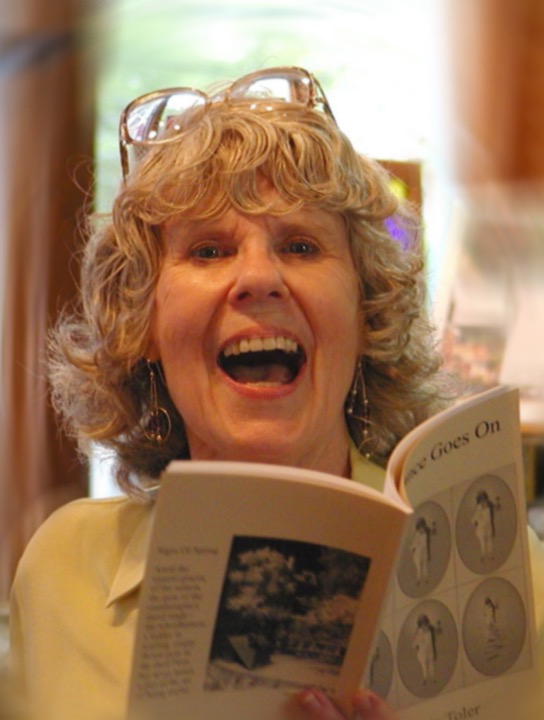
Author: Rosalie Toler
Rosalie Toler; writer of humor, religion, nature, and letters and a gifted speaker of motivational programs. She also wrote many essays on her subjects of humor and religion with those published in magazines and newspapers. She developed into a writer of poetry and self-published two collections of that work.
Rosalie was a summa cum laude graduate from Southwest Missouri State University with a degree in English and Religion.
Very interesting insight indeed